

 中文版
中文版 Spain
Spain Arabic
 Russian
 Korean
 Thai
Thai vietnamese
 Persian
 Deutsch
 Türkce
 日本語
日本語Do you really know how to use an oil dipstick?
Oil, it's a topic that has been discussed for a long time. As various models of vehicles have been reporting oil consumption problems in the news, car owners have developed the habit of checking the oil dipstick. But do you really know how to use the oil dipstick?
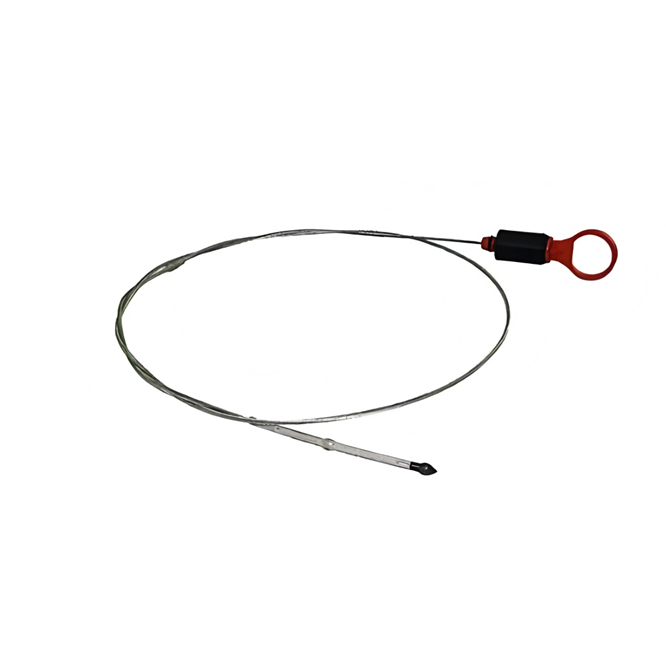
The function of the oil dipstick is to measure the static liquid level of the engine oil, thereby indicating whether the amount of engine oil is within a reasonable range.
The oil dipstick is usually located beside the engine, some are on top, and some are on the side. The dipstick has a distinct feature - there is a hand lever which is easy to identify. When using it, use a towel or soft paper to pull out the dipstick, clean it with the towel or soft paper, and then insert it back into the engine's oil dipstick slot all the way in.
When the engine is cold, it shows the total capacity of the engine oil; when the engine is hot, it shows the amount that meets the engine's requirements. When the engine is cold, most of the oil gathers in the oil pan; when the engine is hot, the oil flowing between various components has not yet returned to the oil pan.
Except for some models which require checking the oil level when the vehicle is warm, it is advisable to check it when the vehicle is cold. This is to prevent starting the vehicle with insufficient oil.
The regular oil dipstick usually has clear upper and lower limit marks. As long as the detected oil level is within the range of these marks, it is sufficient. One thing to note here is that more oil is not necessarily better. When there is too much oil in the engine, the running resistance of the engine will increase and the fuel consumption will also rise.
Furthermore, even when the oil dipstick reaches the lower limit, there is still some oil in the engine. It's just that the amount of oil has reached the minimum level that can be used. In this case, the lubricating function of the oil is sufficient, but intense driving is not allowed. Otherwise, it will cause the engine to bear excessive load, increase temperature, and lead to the failure of overheating of the engine.
Nowadays, some cars use electronic oil gauges. With this, there is no longer a need to open the engine hood to check the oil level. All you need to do is look at the markings on the dashboard. Generally, electronic oil gauges only show the maximum and minimum levels, and the normal range is usually in the middle or slightly higher position.
end
Hot products


Subscribe for the latest news. Stay updated on the latest trends.